Less admin, more etching.
Track editions, print fairs and galleries from one print studio. Printmaking spreads editions across galleries, fairs and collectors. Plya keeps each edition as a project, with the people and invoices around it.
Free to start. No card needed.
Leaf and Horizon
Linocut · 9 × 12 in on kozo · edition of 25, AP I–III
Canvas
Each edition is a project with its own canvas. The print sits in the middle, the galleries and collectors holding impressions sit around it, and a sticky under each lists the numbers they have.
The admin that comes with editions, fairs and galleries
An edition sells one numbered print at a time, from several places at once, often over years. Each number can be sold once, and you're the only one who knows where all twenty-five are.
Twenty-five prints, sold over years
One printmaker puts the fastest sell-out at about two years, even for an edition of 24. Some editions still have prints in the flat file a decade later.
Which number sold at the fair
The sale goes through at the booth, and the number goes on a receipt or into a notes field. Matching it to your records waits until the fair is packed up.
The prints at a juried show
A juried print show keeps your prints until it closes in June, and you supplied the return label. Two galleries hold a few more each.
The number is a promise
An edition of 25 means there will never be a 26th. The proofs, the spoiled pulls and the artist's proofs all have to add up, and the count lives wherever you wrote it down at the press.
At the press
Know what each edition needs before the fair
An edition is a project with its steps as dated tasks: proof and sign the BAT, print the edition, then sign, number and cancel the block. Today lists what's due across every edition in progress, so the run is dry and signed before the fair opens.
Keep the proofing log with the edition
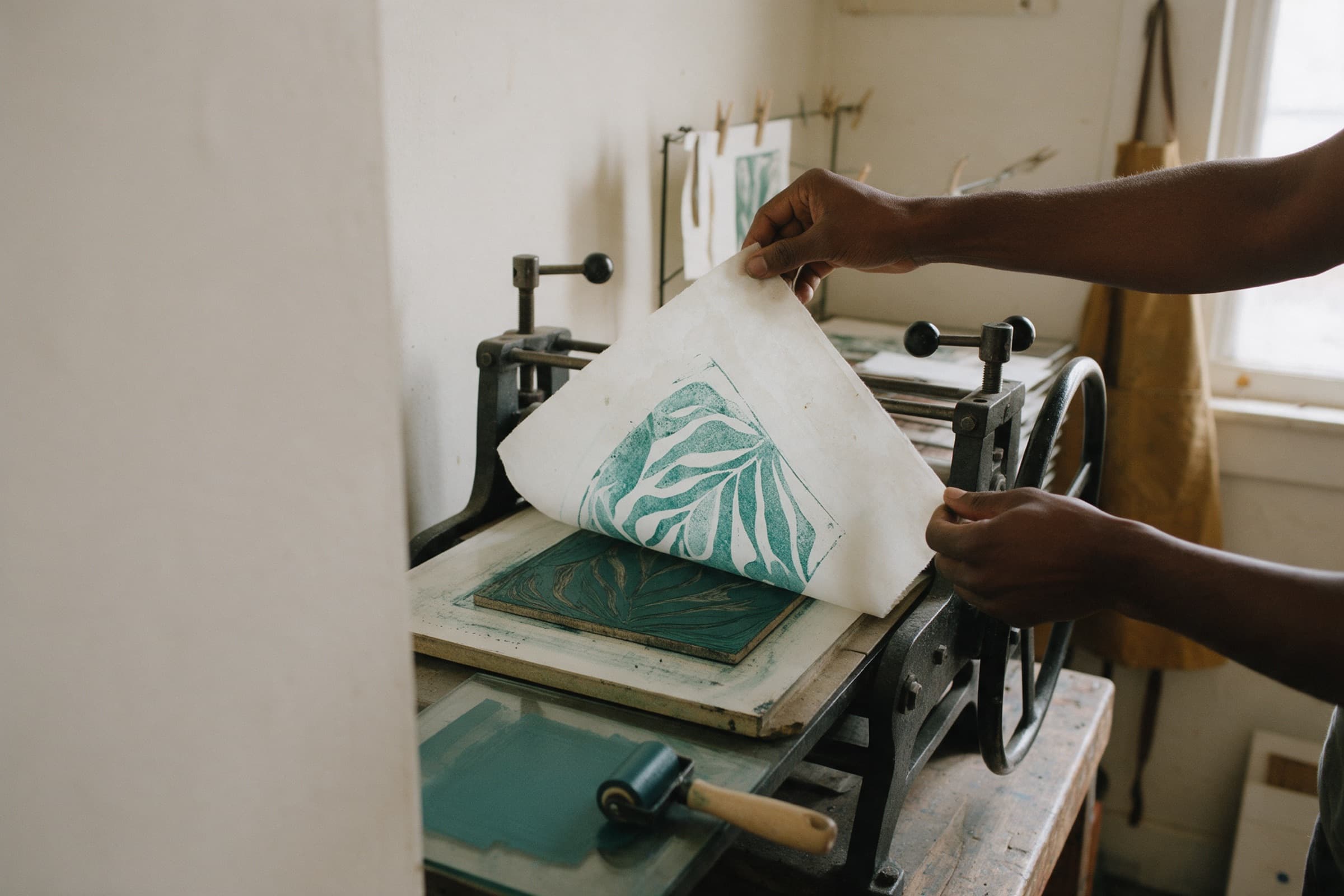
Each edition gets a note linked to its project. Add a photo of each trial proof with what you changed, the day you signed the BAT, and the count once the run is done: how many you pulled, how many spoiled, the edition and the APs, and the day you canceled the block. When a gallery asks for it, download it as a PDF from the note's menu.
How notes workLeaf and Horizon, proofing log
Leaf and Horizon · edition of 25Block cut Feb 20, 9 × 12 in. Kozo paper, oil-based relief ink in a deep teal.
Tell Ash what sold at the fair
The Monday after a print fair, tell Ash which numbers sold. It adds each sale to the end of that edition's proofing log, and makes the task you ask for, like restocking the fair box. Every change it makes shows with Open and Undo.
How Ash worksLeaf and Horizon, proofing log
The count
- Pulled 30 on Mar 13. 2 spoiled.
- Edition 25, AP I–III.
- Block canceled Mar 20.
Tools for the full printmaker's year
Residency deadlines, print week, juried shows, editioning and the holiday sales come around every year. Each one has a place in Plya.
- January to FebruaryJan to Feb
Residency deadlines
Residencies and grants with press time close in winter. Opportunities lists the printmaking ones with their deadlines and entry costs. Mark the ones you've applied to.
- March to AprilMar to Apr
Print week in New York
The IFPDA Print Fair and the fairs around it fill a week in New York. The publishers, dealers and print-room curators you meet go in Network, each linked to their gallery or press.
- May to JuneMay to Jun
Prints out at juried shows
A juried show keeps your prints until it closes. The pickup or the return label is a task, due the day the show comes down.
- July to AugustJul to Aug
Editioning for fall
Proof, BAT, print, cancel. Each new edition is a project, with those steps dated back from the first fall fair.
- September to OctoberSep to Oct
Exchanges and mini prints
An exchange portfolio asks for a set edition on set paper, like 13 prints on 11 × 14. Keep each call's size, paper and due date in a note.
- November to DecemberNov to Dec
Holiday print sales
Prints sell as gifts in December. Invoice the collectors who buy direct, paid online to your own Stripe, and Finance shows what's paid and what's still open.
Print the price list for the fair
Keep a note with every edition you're bringing to the fair: its size, its paper, the edition size and the price. The week before, download it as a PDF from the note's menu and print it for the booth.
Made for every kind of studio
Furniture
Commissions, deposits and the design trade
Lighting
Trade orders, tear sheets and showrooms
Ceramics
Wholesale orders, stockists and commissions
Textiles
Commissions, licenses and galleries


Spend more time at the press
Know where every numbered print is, how many you pulled and who has paid, and keep the studio for ink and paper.